
Interstate highway system also known as the Dwight D. Eisenhower National System of Interstate and Defense Highways stringed across this vast country. The total length of the interstates is 46,876 miles long. Withthis length it is the longest in the world. All interstates are controlled byindividual states. These roadways are a big contribution to our travel. They mostlypass through all major cities. Not only do they go through the major citiesthey also go right through downtown which brings in a lot of tourists. Interstatesare commonly used for travel for work or vacation or major events in bigcities.
The interstate highway system was authorized by the Federal Aid Highway Act of 1956. It was lobbied by a lot of US automobile manufactures and promoted by Eisenhower himself. Eisenhower was greatly influenced by histravels in the army and by the German autobahn. He knew this system would be agreat deal for American citizens. He believed that it would be a key way totransport military vehicles.
Planning for this highway was started in 1921. During this time there were a lot more vehicles hitting the road so it seemed like a necessity to Americans to have a highway system. Even after so many years some of theinterstates are still being constructed. It took almost 35 years to completeinterstate 70 through Glenwood Canyon. Some of them were even discontinued likeI 95 in New Jersey. But there have been plans to re start the project andfinish it. Three states claim to be the first to start on the highways. Missouri,Kansas, and Pennsylvania have all claims to be the first. Nebraska was thefirst to finish a interstate project in 1974.
All interstates have a set of standards that they have to meet according to the American Association of State Highway and Transportation Officials (AASHTO.) one absolute standard is the controlled access nature ofthe roads.

Each state can set their own speed limits for their designated stretches of highways. Down in the south western states the speeds are generally higher because of the less traffic volume down there. In thenorth eastern states it is set lower because of the higher traffic totals. It rangesfrom 80 miles per hour down south to 40 miles an hour up north.
North south highways are always labeled with odd numbers never over exceeding 100 and east west highways are always even numbered. Numbers of highways divisible by 5 are generally the more major highways there are alsoauxiliary interstates that usually trek through big cities that consist ofthree digits. One example of this is interstate 680 which travel through Omaha.
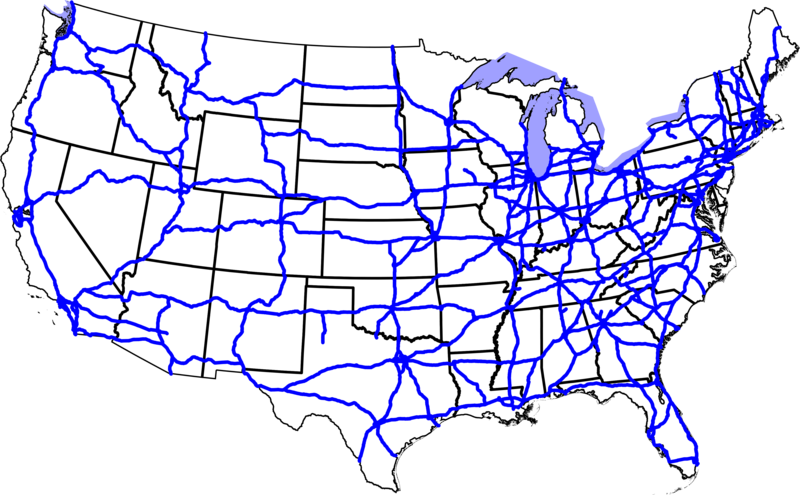
Many people ask the question. Can there be interstates in Hawaii and Alaska? The answer is yes because they are states of the US. They receive funding from the government to build highways. Funding for these highways weregotten back by using the toll system which made people pay a toll to travelthese roads. It was also achieved by taxes. We have mostly strayed away from tollsbut there are still a few around. The cost to cover repairs on the roads isgenerally made through taxes and gas prices.
I think the interstate highway system was a great advantage to our growing society. It helps out in many ways. I use the interstate at least once a month but many people use it as a daily necessity for traveling towork. I bet it surely makes the daily commute a lot easier. I have been to Bellevueand if I remember correctly they still have a toll booth and that’s kind of interestingbecause it brings back what our generation may seem as history. I think theinterstate speed limit should be moved up to 80 like it is up in South Dakota. Sorryif It seems like I only skimmed the top but there was so much information aboutthis topic that it was hard to cut it down and condense it to a bearablereading length for history class.
http://en.wikipedia.org/wiki/Interstate_Highway_System#Standards


Comments