
Rosa Parks and Montgomery bus boycott
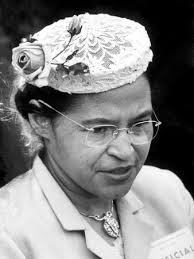
In December of 1955, Rosa Parks changed the country for all African Americans, just by sitting down. Rosa worked at as a seamstress at a department store and rode the busses to and from work. After a long day, she boarded the bus and sat down in the 5th row which is the first "colored" section. The way the segregated bus system worked in Montgomery, Alabama, was when the bus became full, the white people were given the seats. The bus driver, James Blake, ordered Parks and three others to move so the white people could sit. They all moved - except Rosa Parks. After arguing with the bus driver for a short minuite, he told her he would have her arrested, and she simply said "you may do that". She was arrested and fined $10.
On the night of her arrest, Jo Ann Robinson, head of the Women's Political Council, printed flyers and spread them through the community which basically told all of the women and children that if they work, to take a cab or walk, but to stay off of the buses on Monday.
The next morning at a church meeting led by Martin Luther King Jr. they proposed a citywide boycott. They were hoping it would draw such a line that when the bus became full, the whites could not force the blacks out of their seats, they too would have to stand instead. They had a good feeling about this because there had been a few other similar segregation stories like this in the south.
By Saturday, it was obvious most of the black community was going to support this boycott. The black taxi drivers had even agreed to only charge 10 cents - equil to what a bus fare was. But then, on December 8, an order went out saying that any cab driver that charged less then 45 cents would be fined. That still didn't stop the black community. They found other modes of transportation like personal vehicles, biking, hitchhiking, riding mules, or horse drawn buggies.
The boycott made many people mad. They took their anger out with violence. King's and Albernathy's houses both got firebombed. So were 4 black churches. There were also many protestors that were physically attacked. King and 155 other protestors were arrested for "hindering" a bus. He was given a $500 fine and to spend nearly 390 days in jail. He only spend 2 weeks in jail though. Kind said "I was proud of my crime. It was the crime of joining my people in a nonviolent protest against injustice."
Victory
On June 4, 1956, the federal district court ruled that Alabamas racial segregation rules were unconstitutional. However, an appeal kept the rules intact for a while longer. On November 13, 1956 the Supreme Court over rulled which pretty much gave blacks the free choice to sit pretty much anywhere whites could sit on the bus. The boycott officially ended on December 20, 1956 after 381 days.
To blacks all over the country this wasn't just about blacks getting to sit where they wanted on buses, it was about national civil rights movements. It also pushed King into the spotlight as a national leader for black americans.
Personal thougths: I think the world needs more people that stand up for posative things like this. I think Rosa Parks showed great courage to do this. I'm glad that our country doesn't have as much racism now because I'm against it. I think Rosa Parks and King are both great examples of the outcome you could have by standing up for something you believed in.
http://www.ushistory.org/us/54b.asp
http://en.wikipedia.org/wiki/Montgomery_Bus_Boycott


Comments