
For this assigned blog, we were to take a topic or two from the ones Mr. Bruns assigned us and give an overview of it. I had D-Day and Battle of the Bulge. I decided to do D-Day first:
D-Day Invasion:
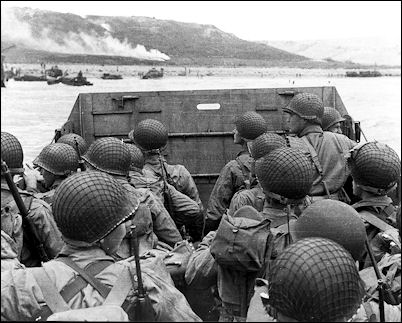
Both the United States and Great Britain had built up their troops until June 1944. They were preparing for an amphibious attack, an attack from water to land. General Eisenhower was the man who had control over calling giving the order, and though weather conditions weren't favorable, he decided to go with it. It began at 2:00 A.M. on June 6th, 1944. Three airborn divisons, two American, one British, were dropped behind beach lines to secure the seaborne forces landings. After several preparations through bombings, troops began landing at 6:30 A.M. 5,000 naval ships and 4,000 sea-to-land ships hurtled toward the enemy. The right and left flanks were easily defended, thus they had it easy. Omaha Beach had it the worst, however. They had no clue just how heavily defended German troops were.

Source: http://www.worldwar2history.info/D-Day/
Battle of the Bulge:

Winter of 1944-1945 brought about the end of Nazi German offensive tactics in WWII. It began December 16th 1944 on the word of a man who had to have been kidding himself: Adolf Hitler. He believed the alliance between Great Britain, France, and the United States would fall if they were to have a long list of defeats. Hitler decided the bulk of the attack would be against the U.S. forces. Many on both the German side and now analysts and historians believed that Hitler's plan of attack was a kind of revenge tactic after D-Day had ended, which by the way had really sent Germany toward defeat in late WWII. During the first two days of battle, it seemed the German risks had payed off, but it didn't last long. The kicker was a lack of fuel. On December 22nd, the weather cleared, and American bombings began a counter-attack against the Germans. By mid-January the lack of fuel for the Germans signified a defeat. Vehicles became abondoned and soon the effort was ditched entirely by the Germans.

Source: http://www.historylearningsite.co.uk/battle_of_the_bulge.htm
On a personal note, it has been stated and proven that both D-Day and Battle of the Bulge were the largest battles America fought in WWII, both involving more than 500,000 men. Both involved massive risks for either side. If Germany had stopped the forces at D-Day, we could have been in the war for another few years, and confidence in troops and leaders would have diminished. Had Germany won the Battle of the Bulge, the tide of WWII would have turned again, and yet again war would have continued for years, perhaps more than any D-Day could risk. While I do not like war and never wish death and defeat upon anyone seriously, it was a necessary loss for Germany, and perhaps they didn't realize that their leader would become one of the most notorious villains in the face of history.


Comments
Great reflections! A tad brief on the summaries though!