
My topics: Rural Electrification Administration (REA)
Critic's of the New Deal; Long, Caughlin, and Townshed.
(REA);
- Rural Electrification- the process of bringing power to rural areas
- Although nearly 90 percent of urban dwellers had electricity by the 1930s, only ten percent of rural dwellers did.
- Utility companies said it was too expensive to string electricity to the isolated farms.
- The private companies said that the farmers were too poor to afford electricity anyway.
- The Government thought that since the private companies wouldn't supply it, then it was their job to help the farmers.
- Many companies that the government shouldn't be able to involve themselves in this because they were creating unfair competition to the companies. Government had enough money, and may be able to charge less.
- Others thought that the farmers didn't have the ability to manage their own local electric companies.
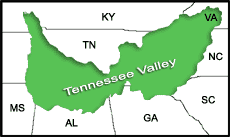
- TVA (Tennessee valley authority) helped to try to improve the conditions for most of the people living in the Tennessee valley. It set up many dams along the river to generate hydro-electricity.
- At first, the president wanted to rely on the state government to control this, but with the depression, collapsed the power of a lot of the state authorities.
- The R.E.A. helped the utility companies in low populated, poor areas, to finally be able to afford and set up electricity.
- The R.E.A. is one of the most quickest, and best successes in the U.S.
- Just after two years since it started, it set in place 350 projects in 45 states. Giving electricity to 1.5 million farms.
- By the 1950s, over almost all American farms were supplied by electricity from the R.E.A. or other companies
- It helped contribute to the growth of suburbs.
- After 1949 the R.E.A. helped people to get telephone services.
- Now 98% of people have telephone service and most rural people have electricity.
- In 1994, Congress established the Rural Utilities Service (R.U.S.) as a federal agency within the U.S. Department of Agriculture ( U.S.D.A.), and it absorbed the R.E.A. and its responsibilities for rural electrification and telephone service. (copied)
Critics and failings of the New Deal:
Huey Long
- an early supporter of FDR, turned against him and the New Deal claiming that it was too beholden (0bligated) to big business.
- Father Charles Coughlin was another early Roosevelt supporter who later turned against his reforms. And, the United States Supreme Court, from time to time, found some of the largest New Deal programs to be unconstitutional, resulting in an interesting backlash by Roosevelt.
- Because of Longs "creative" methods of financing public works projects in Louisiana, he was barely in office a year before he was investigated by the IRS and survived an impeachment attempt.
- In 1930 he became a Senator to Washington DC,He was a vocal supporter of Franklin Delano Roosevelt in the 1932 election, but when Long was not offered a federal post he turned against him.
- He came to oppose the New Deal because, as he saw it, it was too generous to the corporate interests which he claimed to despise.
The administration claimed that what was good for business was good for America, but Long spoke directly to his constituents with his "Share Our Wealth" plan. This greatly appealed to the majority of people voting for him in Louisiana, among the poorest in the nation, as it was a plan to strip the very-rich of their fortunes and redistribute it to the masses. It had the added benefit of showing the people that he too had a plan to ease the suffering caused by the Great Depression. The New Deal had many "Relief" style programs meant to put a few dollars in the pockets of the unemployed, but it also paid much attention to "Reform" and "Recovery" aspects that some could interpret as a form of "corporate welfare."
Long's plan was relief, recovery and reform in one shiny, socialist box. He and his ideas were very popular in his home state, but it is unknown whether his ideas would have been embraced on a national level, as he was assassinated a month after announcing his bid to run against Roosevelt in the 1936 presidential election.
Charles Coughlin
- Was strong in faith, and an early supporter of Roosevelt.
- Roosevelt had early monetary (money?) programs, that Coughlin greatly believed in, but when Roosevelt didn't add on additional radical reforms, Coughlin turned against him
- In 1936, he supported a third party against FDR and fought against FDR's reelection
- Coughlin called Roosevelt a liar, and a double crosser, who drove farmers and citizens from their homes.
- He then spoke over the radio and accused Roosevelt as a dictator, and claimed the New Deal was a communist conspiracy.
- He compared the days the Roosevelt has ruled, to the darkest days since the 'assassination' of Christ.
- But after Pearl Harbor was bombed, he ceased all his political activity, taking advice from his Bishop
Francis Townsend:
- Townsend got involved in politics in 1933, when he saw a women rummaging through the trash
- He proposed that the government give 150 to people over 60 every month, they would spend the money, and it'd help end the depression.
- The government could pay for it by taxing wholesale and retail
- By 1935 his Townsend club had over 5 million members
- Townsend got over 20 million people to sign his Old Age Revolving Pension Plan and congress passed the social security act.
- This act tried to decrease old age, poverty, and unemployment.
- It act helps unemployed and the retired.
- Townsend wasn't happy with this act, it wasn't what he was asking for
Francis Townsend formed with Charles Coughlin and Huey Long in 1936 to form the National Union of Social Justice in attempt to overwelm FDR's chance of running a second term, but failed.
Sources:
http://newdeal.feri.org/tva/tva10.htm
http://en.wikipedia.org/wiki/Rural_electrification
http://www.u-s-history.com/pages/h1653.html
http://eh.net/encyclopedia/article/malone.electrification.administration.rural
http://www.dtman.com/steve_private/school/newdeal.htm
http://www.spartacus.schoolnet.co.uk/USAtownsendFE.htm
http://en.wikipedia.org/wiki/Social_Security_Act#Creation:_The_Social_Security_Act


Comments