
Soup Kitchens of the 30's-
At this point in the 30's it was a peek in the Great Depression. People lost there jobs, people lost there homes. What people thought of as life was suddenly going down hill very fast. Soup kitchens were known for being reliable to the poor and hungry since at least the eighteenth century. So people really relied on these. Soup kitchens had really started up agian around the time of 1929, when the real effects of the Great Depression had begin to do a lot of damage.
The need for Soup Kitchens had spirreled up really around 1932.
 This is what the plan for Soup Kitchens looked like.
In the Great Depression times many people had needed food. Something to fill there stomach to get them by. So soups were always the most reliable because water could be added to get it to go farther.
Soup Kitchens had really first been invited in Europe. Count Rumford, who was the one to create a low-cost, place for people. It was origanally a diet for the Bavarian military. He found that the cheapest, most tastey, and best food was a soup! Manly composed of pearl barley, peas, potatoes, cuttings of fine wheat- bread, vinegar, salt, and water. His soups had become really famous threw out Europe. Originally they were used to feed the military but then they were soon soup houses not only throughout Europe, but also England and the United States to feed the poor.
Soup Kitchens were usually open on weekdays, and opened for Lunch and Supper but rarely for both. They serve diffrent kinds of groups of people. Including homeless, unemployed, working poor, public assistance recipients, elderly, and people with health problems and disabilities. Which was great back then because there was no work for the people who were just fine, let alone the people who were getting older and disabilities and so on.
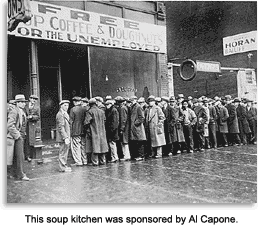
This is a usual amount of people who came to the Soup Kitchen in need of food.
The nutrients were most often found lacking are; Calcium, Vitamin D, Vitamin B6 and vitamin B12. Also, Riboflavin and Iron may not be reachable for women pregant. Foods from the dairy group and in
certian milk, all excellent sources of vitamin D, calcium, and riboflavin, were very rarely served in soup kitchens. Dark green leafy vegetables, such as spinach or greens, which are rich in Folate and Vitamin B6, are rarely served. And meat, the best source of Iron and Vitamin B12, were hardly ever served. Meats are most often served in small portions in casseroles. Not much at all was put in. Meals may also be high in fat and sodium as they serve highly processed and canned foods. They took what they could though.
To this day there are still Soup Kitchens there for people who just can't get by.
http://answers.yahoo.com/question/index?qid=20090209201049AAKCeK0


Comments
Good summary but be sure to always have personal thoughts.