
Temperance Movement-18th Amendment
Temperance movement is defined to be a movement dedicated to promoting moderation and more often, complete abstinence in the use of intoxicating liquor. In the 19th and early 20th centuries many people tried to encourage moderation of alcohol and intoxicating beverages. This movement was started by churches and other temperance organizations. However, many of the leaders of this movement were women who had personally been affected by alcohol. They blamed the alcohol itself for health problems, crime, immoral acts, and even issues of society.
Some of the first temperance organizations were in the United States in the early 1800’s. Some of the earliest organizations were in New York and Massachusetts By the 1820’s the temperance organizations had spread throughout Europe into Ireland and later into Britain. In the United States in 1826 the American Temperance Society, also known as the American Society for the Promotion of Temperance, was formed. The society was established In Boston Massachusetts on February 13. The two co-founders were Lyman Beecher and Dr. Justin Edwards. When this organization was established the temperance movement officially began. The American Temperance Society called for “abstention from drinking distilled spirits but not from beer and wine”. They claimed that “distilled spirits” were more alcoholic than other beverages. I think this is really crazy. They wanted pure alcohol to be taken away from the public, but they didn't think that it was necessary to take beer and wine? To me beer and wine are also alcoholic beverages, so it is really interesting that they didn’t want either of them to be taken from the public.
Other temperance movement organizations were the Order of the Good Templars, which was founded in New York, the Woman’s Christian Temperance Union, and the Anti-Saloon League. Their strategies changed from “moral suasion to agitation for government control of liquor, using social, educational and political tactics”. The churches and industrialists helped these groups get liquor laws passed. Maine was the first state to pass a law that stated the manufacturing and sales of alcoholic beverages was banned. The only exceptions were for “medicinal, mechanical and manufacturing issues, and church”. Many other states followed Maine’s  lead. This then lead to the 18th Amendment in 1919 and the following year the Prohibition would start.
The temperance movement is what caused the ratification of the 18th Amendment. The Congress voted for the amendment’s approval in October of 1919. The law known as the National Prohibition Act of 1920 was then created. The 18th Amendment prohibited the manufacture, transport, import, export, or sales of all alcoholic beverages. The amendment became a law on January 17, 1920 after Nebraska became the 36th state to ratify the law. The Amendment was enforced by the Volstead Act. This act allowed the Treasury Department to legally define what constituted as an “alcoholic beverage”. The amendment was successful at first, and the prohibition appeared to be a great idea. During this time liquor consumption dropped, the number of drunken arrests fell, and the price of illegal alcohol rose so high that the average worker couldn't afford it. As time went on though, the amendment was not working as well as they had hoped, and it would eventually come to an end with the ratification of the Twenty-First Amendment.
Muckrakers-Upton Sinclair
Muckrakers were American journalists, novelists, and critics who in the first decade of the 20th century attempted to expose the abuses of business and the corruption in politics. In today’s terms a muckraker would be a lot like an investigative journalist. Muckrakers’ work didn't really become widespread until national magazines like Everybody’s, Collier’s, and McClure’s became popular. When these magazines started to become mass-produced is when the muckrakers were able to receive sufficient funds for their investigations, and their work was able to be shared with a large enough audience that their investigations raised questions. A lot of the articles in the early 1900’s were written about trusts, and many of them attacked the trusts.
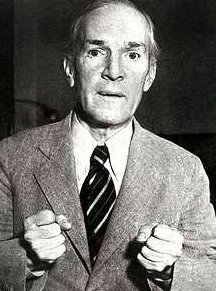
There were many different muckrakers, each uncovering shocking realities. One of the more famous muckrakers was Upton Sinclair. Upton graduated from Baltimore graduate College of the City of New York in 1897. He is widely known for being a muckraker who was dedicated to “social and industrial reform”; this is proven through much of his writing. However, he is probably most famous for his graphic novel of the Chicago stockyards, The Jungle, which was published in 1906. This best-selling novel uncovered the truth about the unsanitary process of how many animals were turned into meat. He spend two months is Chicago’s “Packingtown” area to gain the material that he needed to write his book. While there, in addition to finding the way the goods were produced, he uncovered shocking conditions that immigrants working in the packing plant faced.
“Of the butchers and floors-men, the beef-boners and trimmers, and all those who used knives, you could scarcely find a person who had the use of his thumb; time and time again the base of it had been slashed, till it was a mere lump of flesh against which the man pressed the knife to hold it. The hands of these men would be criss-crossed with cuts, until you could no longer pretend to count them or to trace them. They would have no nails,—they had worn them off pulling hides; their knuckles were swollen so that their fingers spread out like a fan.” This is just a short section of The Jungle. This is one of the horrible findings of Sinclair when he visited “Packingtown”. He also wrote about the “beef-luggers” who carried around two-hundred pound hunks of meat, but also about the “men who worked in the cooking-rooms, in the midst of steam and sickening odors, by artificial light; in these rooms the germs of tuberculosis might live for two years, but the supply was renewed every hour.” Sinclair wrote the truth about what was really happening in these packing plants, and not just what people wanted to hear. After writing The Jungle Sinclair wrote that he “aimed at the public’s heart and by accident hit its stomach”
Not only did Upton Sinclair reveal the truth about the packing plants, but because of his book The Jungle the Pure Food and Drug Act and Meat Inspection Act were passed. The Pure Food and Drug Act “prevented the manufacture, sale, or transportation of adulterated or misbranded or poisonous or deleterious foods, drugs, medicines, and liquors and for the regulation traffic therein, and for other purposes”. So the act basically stated that no one could sell or manufacture meat that didn't meet the new standards for packaging meat. The Meat Inspection Act was passed in 1906 and required that the processing of cattle, sheep, horses, swine, and goats intended to be for human consumption were: required to pass an inspection by the U.S. Food and Drug Administration prior to the slaughtering, the carcasses were subject to a post-mortem inspection, and cleanliness standards were also established for slaughterhouses and processing plans. Many of the people in the “Beef-Trust” fought against these acts, but in the end they were unsuccessful and the acts became laws.
Upton Sinclair basically started the movement to better the conditions in the packing plants. If it hadn’t been for his article, The Jungle, we wouldn’t have received the Pure Food and Drug Act. He uncovered the truth about what was really occurring and being done to the meat, and did exactly what many muckrakers aimed to do, expose businesses and corruption. Many historians believe that if it hadn’t been for muckrakers, like Upton Sinclair, the Progressive movement wouldn’t have received enough support needed for economic reform. This truly proves that the muckrakers were more than just a bunch of journalists.
Works Cited
"The Baltimore Literary Heritage Project." Upton Sinclair. N.p., n.d. Web. 25 Sept. 2013.
"The 18th Amendment." The 18th Amendment. N.p., n.d. Web. 25 Sept. 2013.
States, United. "Pure Food and Drug Act (1906)." NCBI. U.S. National Library of Medicine, 18 Apr. 0000. Web. 25 Sept. 2013.
"Temperance Movement (social History)." Encyclopedia Britannica Online. Encyclopedia Britannica, n.d. Web. 23 Sept. 2013.
"Upton Sinclair Hits His Readers in the Stomach." Upton Sinclair Hits His Readers in the Stomach. N.p., n.d. Web. 25 Sept. 2013.
"Upton Sinclair." Infoplease. Infoplease, n.d. Web. 25 Sept. 2013.


Comments
Excellent job Emma! Impressed!