
3 wars
Rome against Carthage
first war
over control of Sicily
second war
when Hannibal beame gerneral of Carthage and he wated to avenge first defeat
Hannibal attempted a sneak attack through the alps to attack and capture Rome
Third war
Scipio attacked Carthage and Hannibal retreated and fought back at native city
Rome defeated Carthage in all three of the wars
each war was harderfor the Romans to win
war one and two
rome was on the defensive
aggressor in the last war
Key players
Hannibal
Scipio
Cincinnatus
effects
showed the civilizations in the Mediterranean
that Rome was a dominant force
by 70 Rome had conquered a lot of land around the Mediterranean coast
Roman Republic
shortly after their victories in the Punic Wars
quick and rapid expansion began to hurt the empire
land was going to large estates and the small farmers were not making any money and were out of jobs
one of the reasons leading to a civil war
Another civil war broke out because of Caesar's death
Avengers of Caesar
Octavian, Mark Antony, Lepidus avenged Caesar and became the second triumvirate
jealousy here
Octavian forced Lepidus to retire his pwer
Mark Antony fell in love with Cleopatra and followed her to Egypt
Left Octavian to be the sole leader
AGUSTUS
term given to Octavian meaning exalted one
Rome was at the peak of its power and at peace throughout Augustus's rule and even to 180 A.D
PAX ROMANA
Roman Peace
Research
Gladiator Games
Gladiator wars
Facts about gladiators: Gladiators were usually slaves, prisoners of war, or condemned criminals. Most gladiators were men, but there were a few women gladiators. If the blood flow on the ground became too overcoming, a fresh layer of sand would cover it up and the games would continue. Went on until Christianity put an end to it. When two men fought and one was the clear winner, the emperor would decide the fate of the losing contender. He would give a thumbs up if they lived, a thumbs down if they died.
happened after the death of a well known person. The gladiator games took place in an amphitheater because it held people all around the oval ground.
People who volunteered to be a gladiator immediately was not accepted by the Roman people any more.
If you were a good fighter and won many games then you could become very famous of the people.
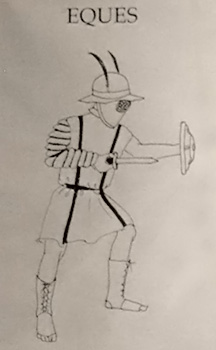
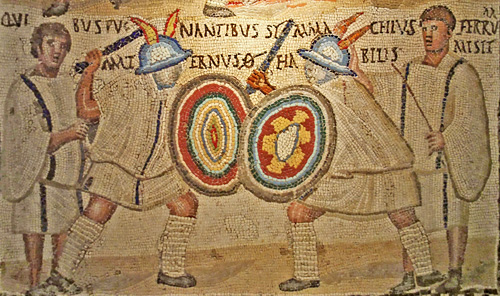
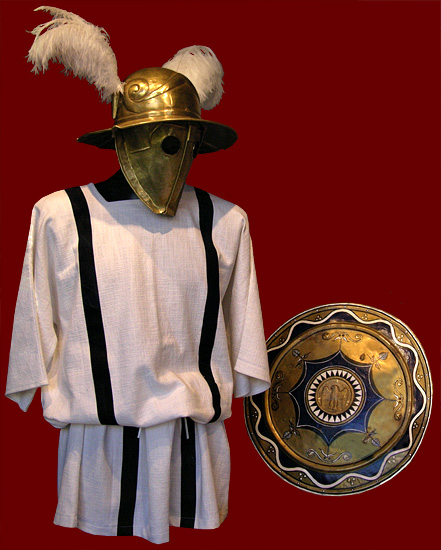
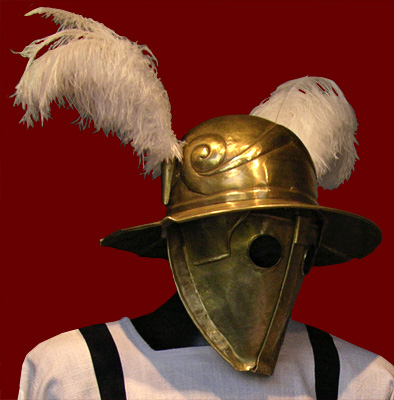
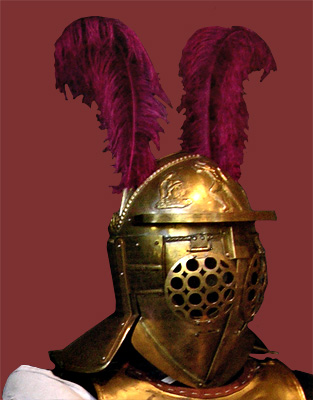
- Eques (“horseman”): The Eques (plural, equites) usually fought against another gladiator of the same type. They probably began their matches on horseback, but they ended in hand-to-hand combat. These were the only gladiators who wore regular tunics rather than any type of body armor (see modern mannequin), though they wore bronze helmets with two feathers and padded shin-protectors; they carried round shields and often fought with long swords.
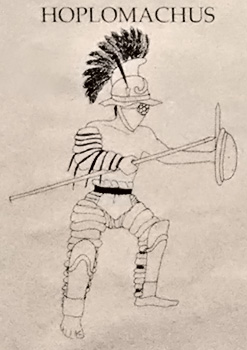
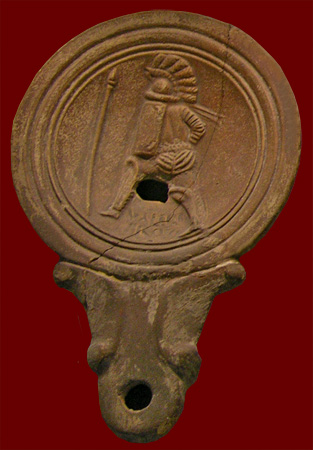
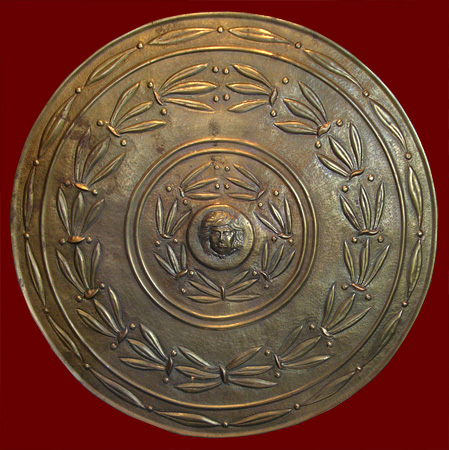
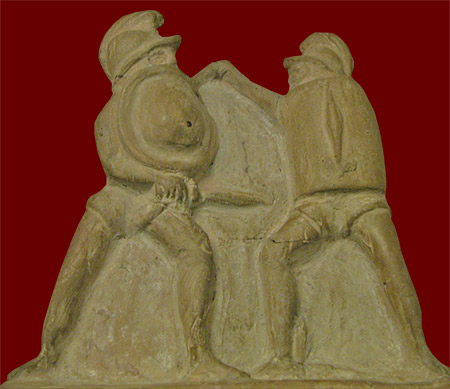
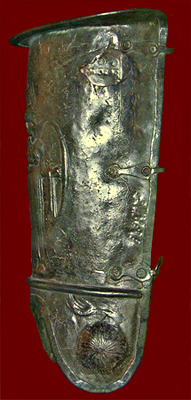
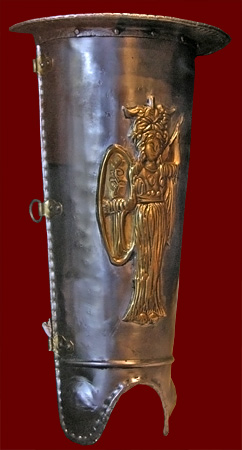
- Hoplomachus (“heavy-weapons fighter”): The Hoplomachus, named after the Greek Hoplite warrior, fought with a long spear as well as a short sword or dagger; he wore a visored helmet with crest and long greaves over both legs to protect them since he carried only a small shield, usually round (see original and replica). In this terracotta relief, a Hoplomachus battles a Thraex, who is attempting to reach over his shield and stab him. A late Republican funeral monument depicts a Thraex fighting against a kneeling Hoplomachus, though both gladiators wear early types of crested helmets without visors.
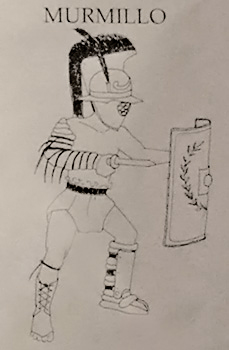
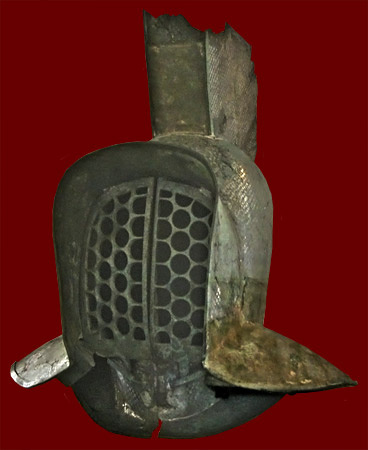
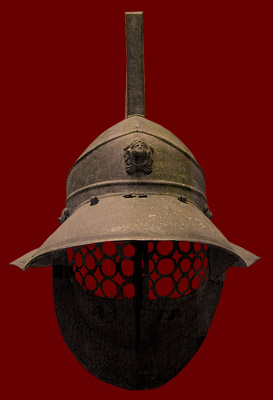
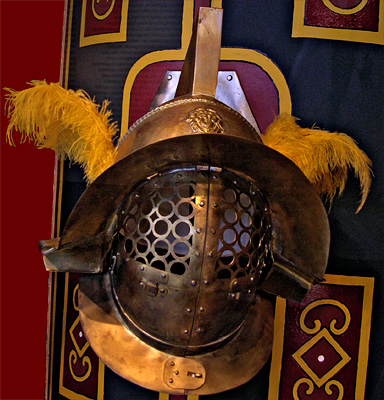
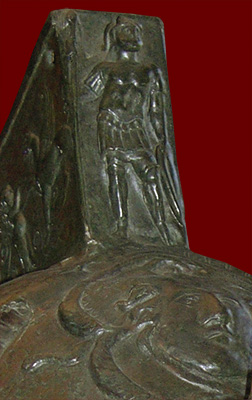
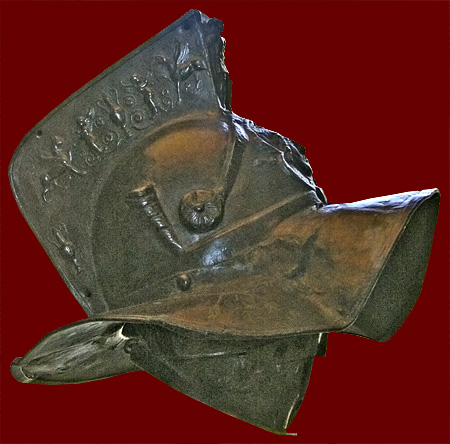
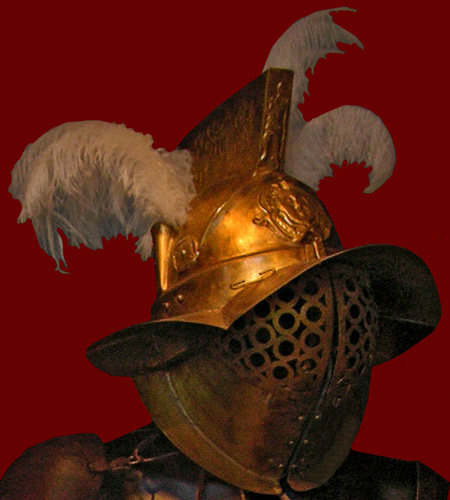
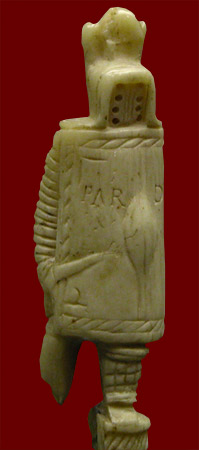
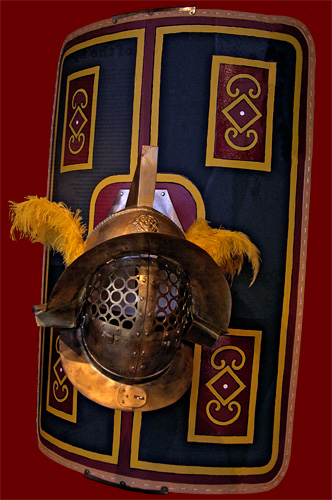
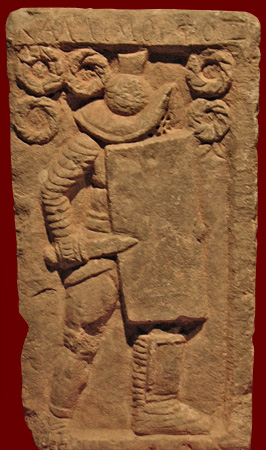
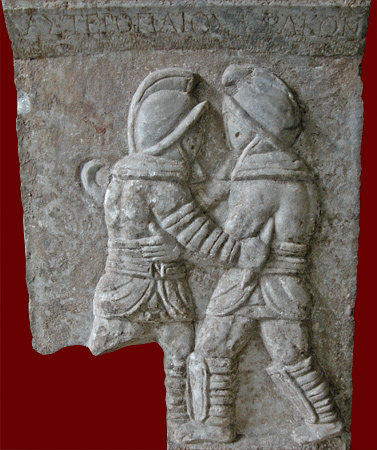
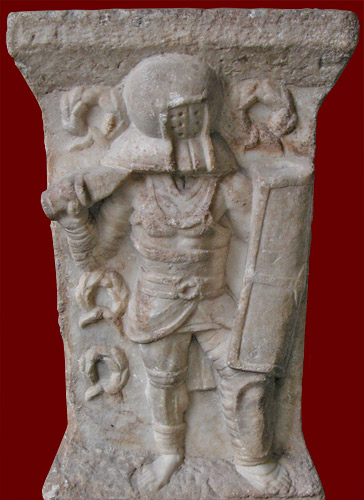
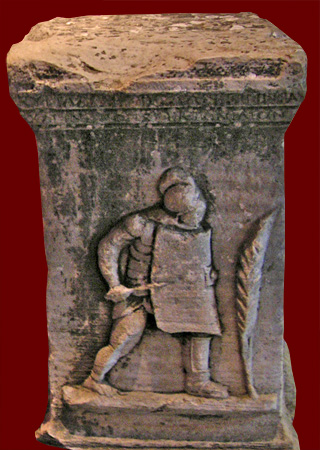
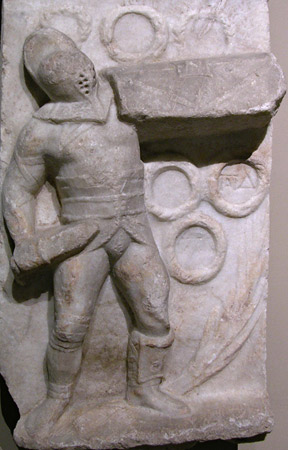
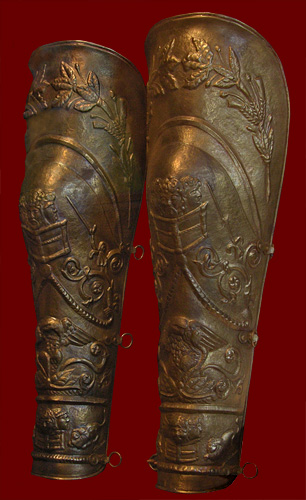
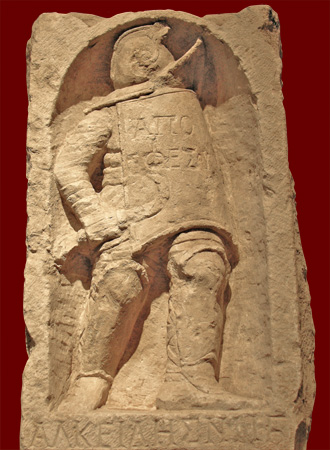
- Murmillo (“fish”): The Murmillo, named for a Greek saltwater fish, wore a large visored helmet with a high crest; these helmets became increasingly enhanced with relief decorations, as for example the head of Hercules (see also replica), military trophies (see front and side of replica), and the Gorgon, Mars Ultor, and decorative vessels (see replica). The Murmillo was protected by a large, slightly curved, rectangular shield(see replica), so he needed only one short shin-guard (ocrea) to protect his left leg (side view; replica). He fought with a short stabbing sword (gladius). The wreaths on a tombstone from Ephesus indicate that this Murmillo won many combats. In another relief from Ephesus, the Murmillo Asteropaios, on the left, is attempting to stab the Thraex Drakon; both gladiators have lost their shields and are fighting in a “clinch.”
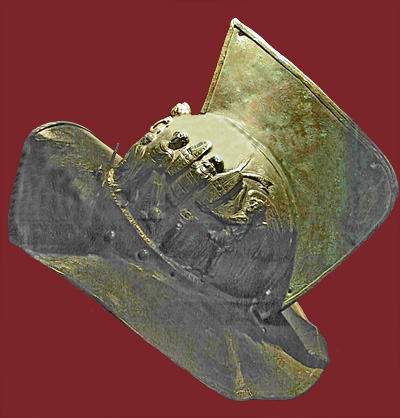
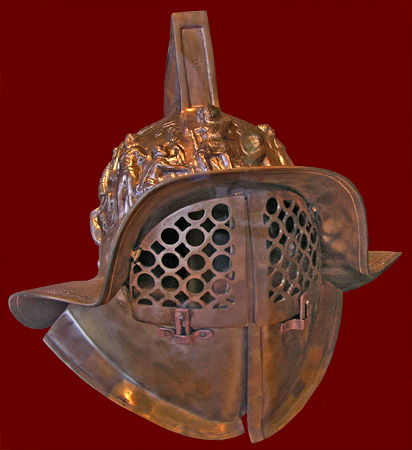
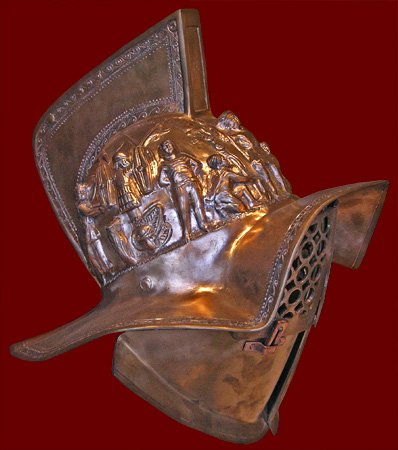
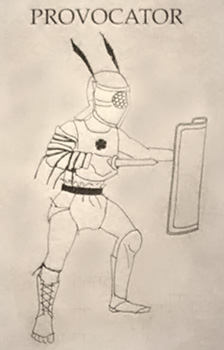
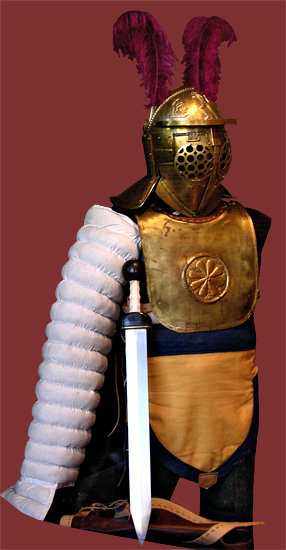
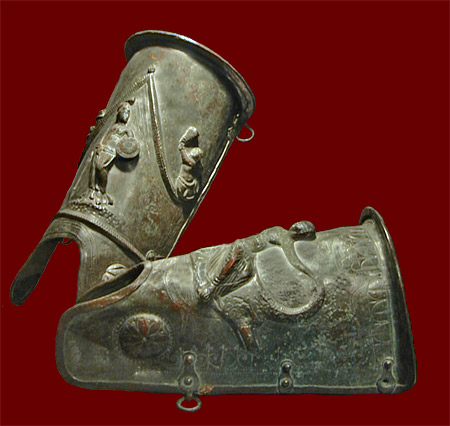
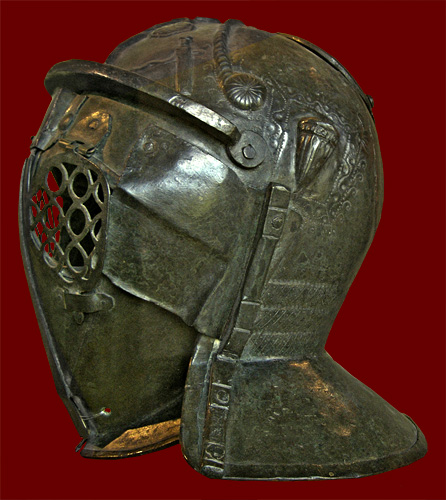
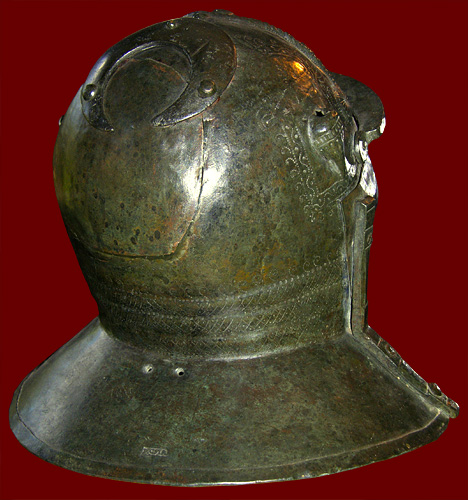
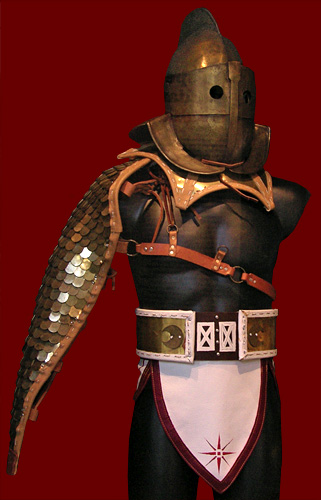
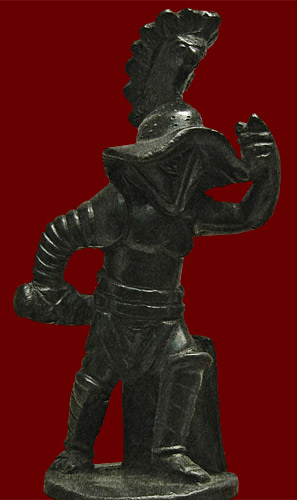
- Provocator (“attacker”): The Provocator was the most heavily armed gladiator; he was the only gladiator who wore a pectoral covering the vulnerable upper chest. He also wore a padded arm-protector and one greave on his left leg; he carried a large rectangular shield and stabbing sword. His large, distinctive visored helmet had no crest and extended over his shoulders (see also replica). The extent of his armor made the Provocator slower and less agile than other gladiators, which may explain why he tended to be paired with another gladiator of the same type in combat.
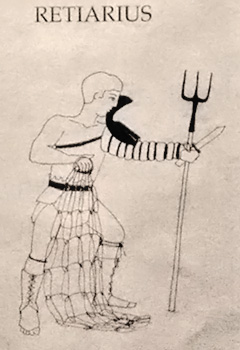
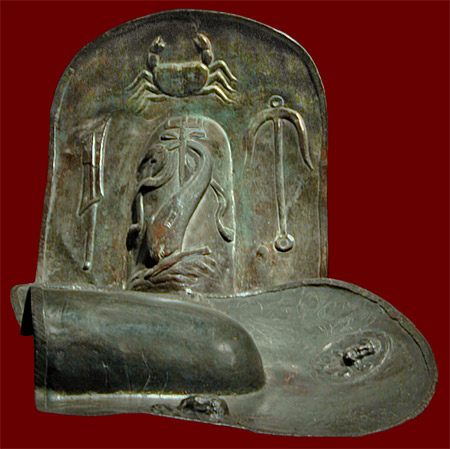
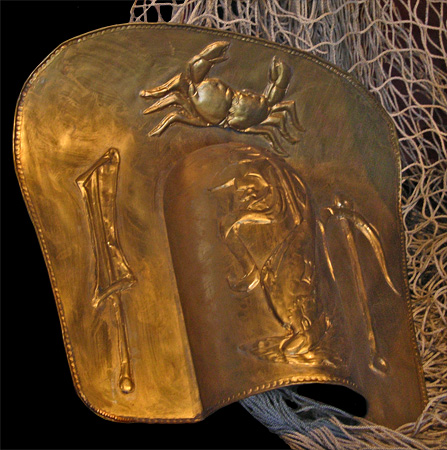
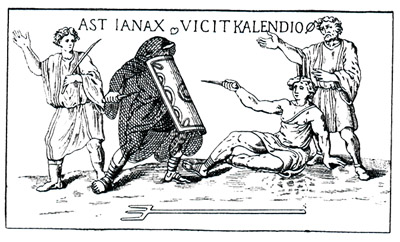
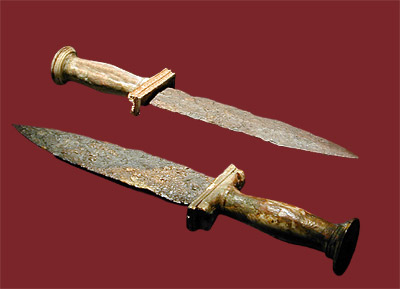
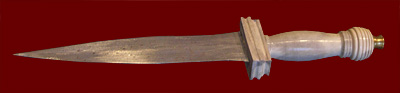
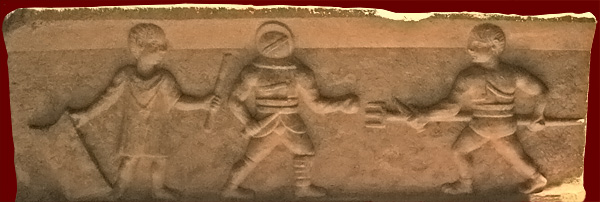
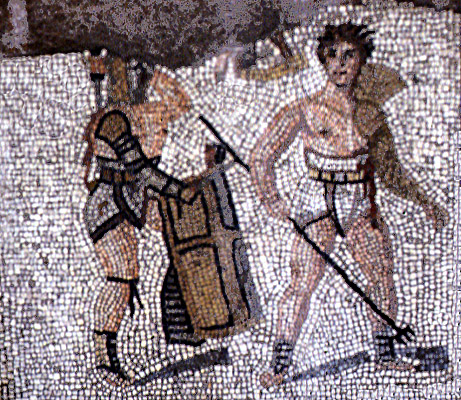
- Retiarius (“netman”): The Retiarius was the quickest and most mobile of gladiators; as the only type of gladiator who wore no helmet, he had much more range of vision than his opponents. However, since he wore practically no defensive armor, he was also more vulnerable to serious wounds; his only body protection was a padded arm-protector (manica) on his left arm often topped with a high metal shoulder protector(galerus), also shown in this replica. His weapons were a large net with which he attempted to entangle his opponent, a long trident, and a small dagger (see also replica). The Retiarius in this relief advances on a Secutor who has lost his shield (which is held by the referee). However, looking at the Retiarius in this mosaic, one has to ask, “Why is this man smiling?” because the Secutor appears about to stab him, while thekneeling position of this Retiarius indicates that he has surrendered to the Secutor who stands menacingly above him.
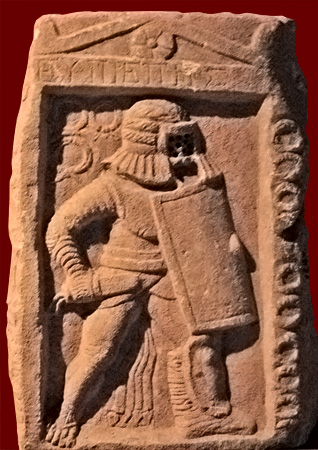
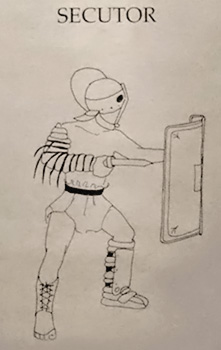
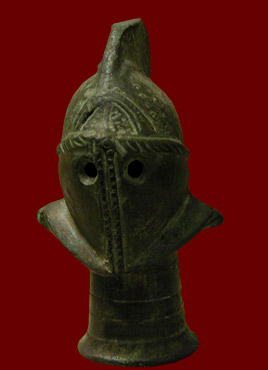
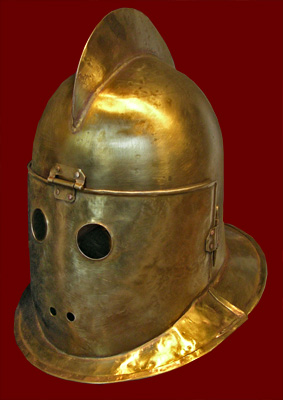
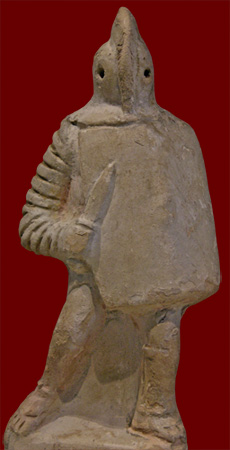
- Secutor (“pursuer”): The Secutor was typically paired with a Retiarius. His egg-shaped helmet with round eye-holes had no crest or reliefs to snag on the net of the Retiarius but also gave him little range of vision. He wore a short shin protector (ocrea) on one leg and an arm protector; he carried a large rectangular shield and stabbing sword. The wreaths on this tombstone of a Secutor indicate his many victories, while an exultant Secutor named Improbus prepares to dispatch a fallen Retiarius in this relief.
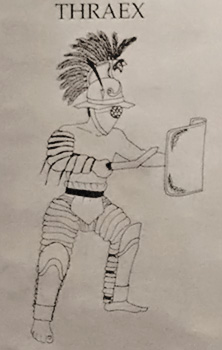
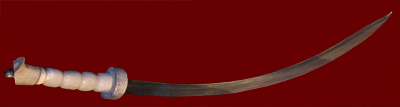
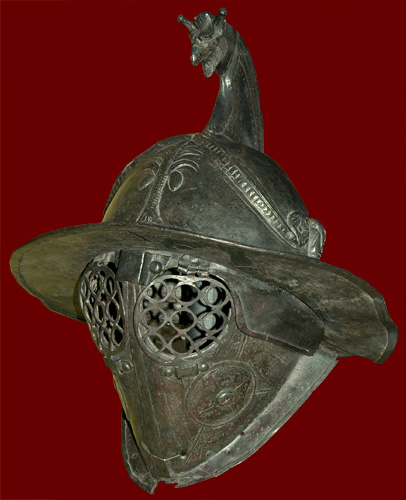
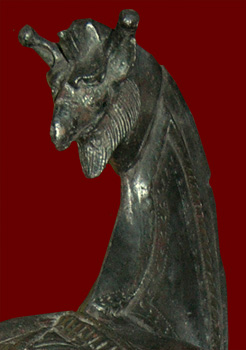
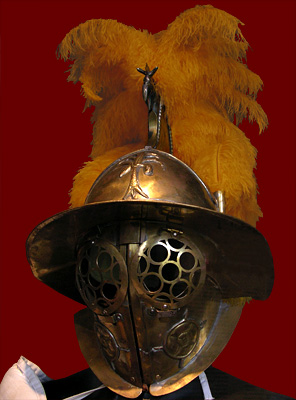
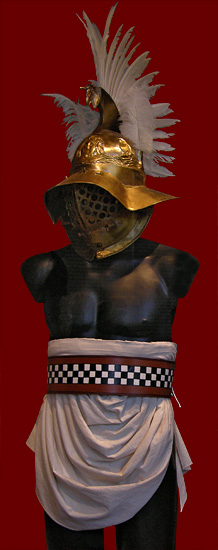
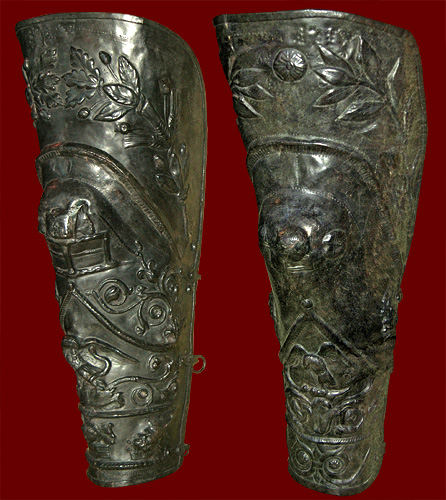
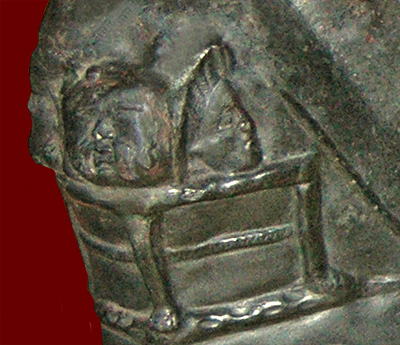
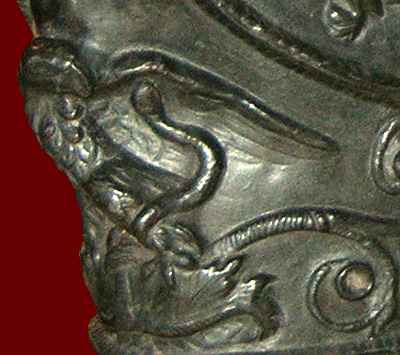
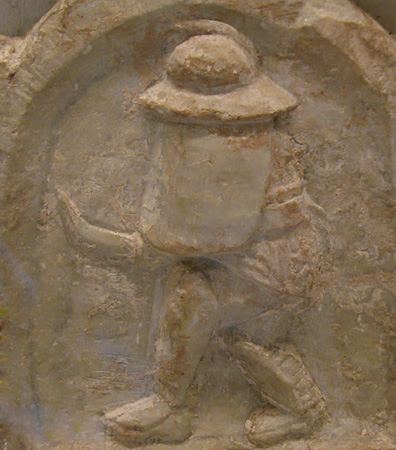
- Thraex (“Thracian”): The Thraex gladiator was loosely based on the Thracians, former enemies of Rome. His most distinctive feature was his weapon, a short sword (sica) whose blade was either curved orkinked. His visored helmet with wide brim resembled that of a Murmillo except that it was topped with the head of a griffin (see replica). Because the Thraex carried a short rectangular shield, he wore an arm-protector and long shin protectors (ocreae) on both legs (these are decorated with theatrical masks and an eagle vs. snake motif; see also replica). The victorious gladiator in this mosaic is a Thraex, while this Thraex holds up an index finger to signal surrender. A tombstone from Antalya and one from Akhisar in Turkey provide good illustrations of this type of gladiator,
http://www.vroma.org/~bmcmanus/arena.html
There would be some fights with animals.
http://www.rome.info/colosseum/
















Comments