
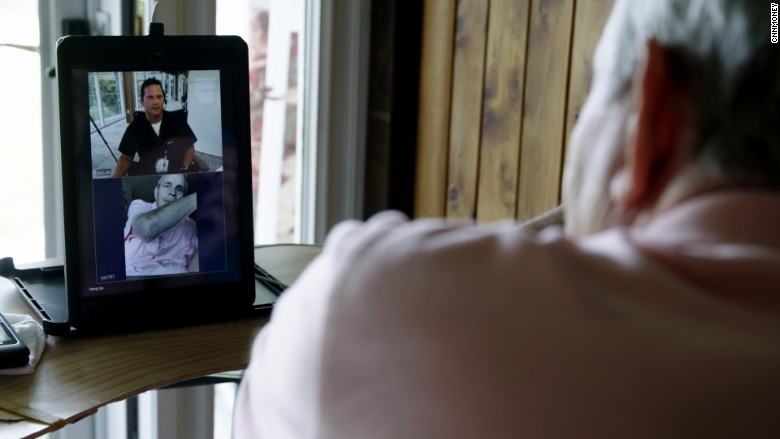
Instead of having 330 workers at Mercy's Virtual Care Center located outside of St. Louis, place video calls to patients using highly sensitive two way cameras and monitor their vital signs in real time through tools like pulse oximeters that plug into an IPad. The goal is to avoid expenses and hassle on both ides by providing care when and where the patient needs it, preventing some of the hospital re-admissions that add $41.3 billion to hospital costs annually. Under the new federal guidelines, hospitals are partly responsible for keeping cost down. So they're turning to video chats to keep the patients out of the ER. The navigators video-call one of the patients on his hospital-supplied iPad and ask the same questions they would during an in-office visit: How are you feeling? Have you been taking your medicine? What hurts?
Story: Link to story
Questions:
1. Do you think all hospitals will eventually use this technology? why?
2. Will this help in the future?
3. What are the positives and negatives about using the video chat?


Replies
Interesting story and well done Megan!
I cannot see all hospitals eventually using this technology. What if the technology were to mess up? I think it is better to see a doctor in person and have them check your vitals. It may help in the future because some people with disabilities and handicaps might have trouble getting to a doctor. A positive would be the fact that people who have trouble getting places can simply talk to their doctor over their iPad, but a negative would definitely be that it would be almost solely dependent on technology. Technology can still screw things up.
I think that this has a big chance of being an option because it lowers the price that hospitals have to spend and in today's society we are trying to incorporate more things with technology. It might help but I'm not sure. This is definitely more convenient, but then again what if someone isn't in a sate that they can operate this or what if people couldn't afford this method.
I feel like they would provide the IPads to the person, but yes it might be very expensive getting all of that technology!
I think it will for sure be an option but I don't think it will take it over people completely because doctors need to be their in person for some things. It will bring down costs because there is a lot less labor in it. Positives on the video chat is that it is cheaper and convenient. The down side is that they are not there in person. For sure a good idea.
I think they will that way they don't really have to be there but yet you are having some of these older people that don't know how to use technology very well. I don't think it will help anything in the future or anything. Because what if they really need to be at the doctors and they kick them out and give them this Ipad to use and they don't know how to.. I can see if you have a young one and they can't leave the house but I think they made the wrong choice by doing this.
Yes, old people will probably have troubles with the IPad, but I feel that they would use this type of technology in the future especially people with terminal illness.
In the future all hospitals might use this technique if it works really well. This is a really good idea, so if people get this to work it will be awesome and it will definitely help in the future. Video chats can crash and the connection might be bad or fail. What if the patient doesn't have any connection, what to do then?
I don't think ALL hospitals will use this, possible some. If the doctors video chat a person and find out that they need urgent care but the person lives in the country or something, then there's a problem there. If the person would've came in for an appointment, then they would have access to all of the supplies needed to treat them. Also, how would the doctors be able to listen to your lungs or examine your muscles for any deformations? I just don't think there need to be many compromises when it comes to medical care. It might help in the future, but I highly doubt it. They do save money by doing this though. Are the price cuts really worth the things doctors could be missing?
I agree, I have a feeling sometime in the future more hospitals will have this type of technology. If you actually read the article they state that they usually use this video chat for people with terminal illness and are on hospice. It would make them more comfortable at home instead of having to go to hospital a lot!
-
1
-
2
-
3
-
4
-
5
of 6 Next